
Types of Heat Illness

Heat-related illnesses encompass a spectrum ranging from mild conditions like heat cramps and heat rash to severe emergencies such as heat exhaustion and heat stroke. Each type presents distinct symptoms, from muscle cramps and skin irritation to more concerning indications like loss of consciousness and elevated body temperature. Recognizing these symptoms promptly is paramount, highlighting the imperative for swift acknowledgment and appropriate intervention.
The Science Behind Heat Illness
Our bodies have intricate ways of dealing with heat. When we’re exposed to heat, our body tries to cool down through various methods like radiation (releasing heat from our skin), conduction (transferring heat to surfaces we touch), convection (releasing heat through air or water currents), and evaporation (sweating). It’s important to understand these processes because they help us recognize the dangers of overheating and figure out how to protect marching band members from heat-related problems. This chart illustrates how spending more time affects the marching band participant.


When Heat Exhaustion and Heat Stroke are suspected it is imperative that care be given as soon as possible. This graphic shows the steps needed to identify and provide appropriate care.
Helpful Resources from NWS and NOAA
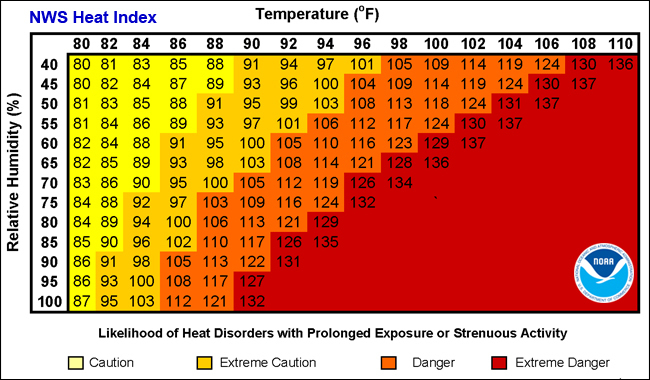
The Heat Index is a measure of how hot it really feels when relative humidity is factored in with the actual air temperature. To find the Heat Index temperature, look at the Heat Index Chart or check the Heat Index Calculator. The red area without numbers indicates extreme danger.
NWS also offers a Heat Index chart for areas with high heat but low relative humidity. Since heat index values were devised for shady, light wind conditions, exposure to full sunshine can increase heat index values by up to 15°F. Also, strong winds, particularly with very hot, dry air, can be extremely hazardous.


The NWS HeatRisk forecast provides a color and numeric value that places forecast heat for a specific location into an appropriate level of heat concern, along with identifying groups potentially most at risk at that level. HeatRisk is accompanied by recommendations for heat protection and is a useful tool for planning for upcoming heat and its associated potential risk.
Based on the high resolution NWS national gridded forecast database, a daily HeatRisk value is calculated for each location from the current date through seven days in the future.
Wet Bulb Globe Temperature (WBGT) uses temperature, humidity, wind, solar radiation, and other weather parameters. It’s a particularly effective indicator of heat stress for active populations such as outdoor workers and athletes.
WBGT can be used to inform activity modifications during exercise or outdoor work. The Occupational Safety and Health Administration (OSHA) recommends protective measures for outdoor work:
- Acclimatize workers starting the first day working in the heat and after any extended absences
- Provide shade for outdoor work sites
- Schedule work earlier or later in the day
- Use work/rest schedules
- Limit strenuous work (eg., carrying heavy loads)
- Use relief workers when needed
